
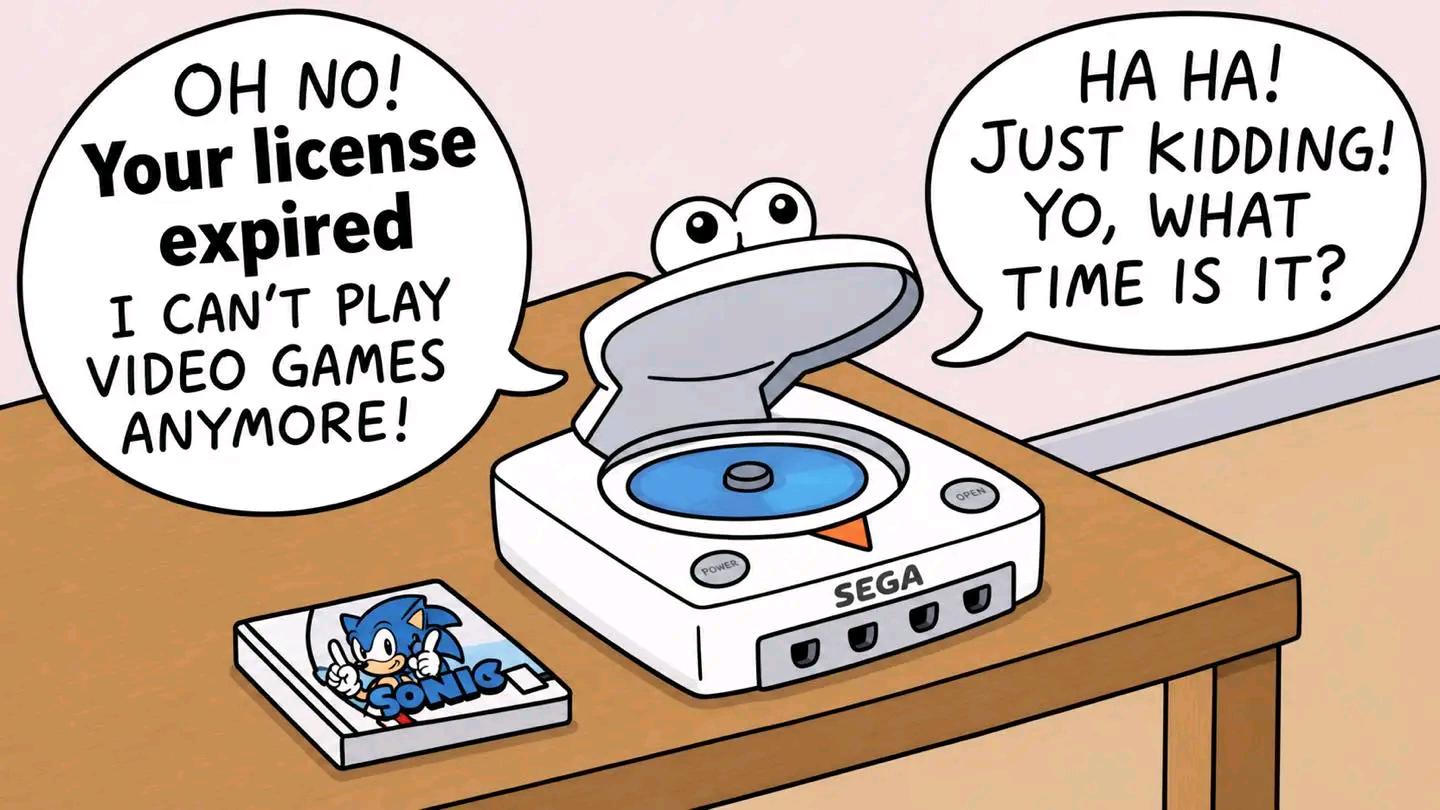
If you don’t own the thing you paid for, you’ve rented it. But renting is an honest relationship: the tenant knows the property isn’t theirs, the term is fixed, the terms are clear from the start. Licensing, on the other hand, manufactures an illusion of ownership. It makes you click “buy,” adds the item to your library, presents an interface that looks like it’s “yours” — but underneath, it’s nothing more than a permit that can be revoked unilaterally. So the direction we’re heading is worse than renting: ownership preserved theatrically, while its legal substance is hollowed out.
And you know how companies feel about licensing. They want to license everything, push production costs toward zero, and maximize profit.

Renting Is Honest. Licensing Isn’t.
We already have a pile of monthly payments on our bills. The real issue is the removal of the option to buy outright. Subscription can absolutely make sense depending on the situation, you don’t need to own a show you’ll watch once. If the purchase price is too high, renting makes sense. If ownership carries risk (maintenance costs, etc.), renting makes sense.
Now, there’s almost no price difference between buying a boxed game and “licensing” one. You can’t resell a licensed game, can’t trade it in. Games are meant to be replayed indefinitely, but there’s a risk of deletion, a risk of account suspension, and no insurance against either.
Let me restate the rent-vs-license distinction: renting makes sense where risk and depreciation are transferred to the lessor, and the price drops accordingly. The licensing scandal begins where the risk stays with the consumer while the price stays fixed at ownership level.
Content subscriptions, rentals, licenses — whatever you call it, this is just the beginning. The trajectory is clear: today you’ll rent the game. Tomorrow, the console. The day after, your “personal” computer.
There’s no ceiling to this. It can get far more absurd than that.
Think about the “token” system we already know from AI. Now integrate that into games. Buy tokens for extra lives. Buy tokens for New Game Plus. Buy tokens for the expansion pack.
I’ll even tell you what the ad campaign will look like: nostalgia for the arcade token machines. “Those good old days are coming back!”
Impossible? Too dystopian? Then let me raise the stakes.
Using excuses like cooling cloud data centers, RAM prices, chip production, and so on, they could pressure governments into putting usage limits on devices we supposedly own in our own homes. They could tell us that if we want to get around that limit, we’ll need to buy a subscription instead (see: cloud systems) – essentially making us pay for the damage the wealthy have done to the world.
And that’s just what comes to mind right now. There’s also “user experience improvement” work that goes beyond renting — in-game advertising, for instance. Remember Sony’s patent, “Advertisement Scheme for Use with Interactive Content”? That’s not a conspiracy theory. It’s a patent waiting for the right moment.

Where This Goes Next
None of this is impossible. Look at the last twenty years. Everything we said “that’ll never happen” to, happened.
This is exactly how dystopias get built, by the way — through people saying “no way, that’s impossible” and not caring.
Now let’s look at the counterarguments. Cost will top the list of excuses. We know the real cost is insatiable shareholders. Remember the Elden Ring story — shareholders weren’t satisfied with the sales. The nerve of that greed. The other excuse will be environmental impact. Please. From the private jets of the wealthy to data centers, there are far bigger and far more serious problems when it comes to the environment.

Why Lawmakers Won’t Save You
The outcome of the Stop Killing Games campaign, which made it all the way to the European Parliament, speaks for itself. On top of that, there’s talk that Ubisoft CEO Yves Guillemot and some industry representatives met privately with senior European officials before the decision was made.
So expecting anything from so-called lawmakers is pointless. None of them actually care.
The only way to bring these companies to heel is a boycott. A real one. Massive and patient. Otherwise our lives will turn into that movie (In Time) where lifespans are rented out. We need to think about the future, or these will be the last games we ever get to play.


Leave a Reply